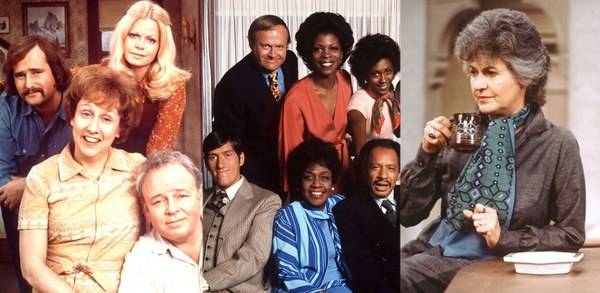
Families are a frequent setting for sitcoms. Some are funny. Some, eh, not so much. Archie Bunker and the crew at “All in the Family” were non-stop laughs and this very successful franchise spun off five others. If you are of a certain age, like the Editor, you certainly remember “Maude” and “The Jeffersons”. But you could win a whole bunch of bar bets if you can name the three other spinoffs that were, shall we say, duds.
Hollywood is certainly a business (albeit a weird one.) But when “Family Matters” arise in the investment business because a new “Family Guy” joins the team, a whole new “Modern Family” dynamic is created and it doesn’t matter if its “The Addams Family” or “The Partridge Family.” (OK enough of the show titles.) Managing this sort of dynamic is complicated.
Sally’s first management assignment included a father/son team that was there long before her arrival. On the listing of the office producers, the son was number one and dad was number three. She suspected that they could move those numbers around easily but in the end it didn’t make any difference to Sally. The book was clean, they were over 50% fee based, and they generally kept to themselves. Pretty good situation all around and Sally knew it.
But one day the firm went through one of its periodic fixed expense staff cuts, and Sally had to cut an assistant. Sally wasn’t going to do anything to the father/son’s assistant although she wasn’t really always the greatest asset to the team. But Sally was shocked when the son proposed to Sally that they wanted to help out the office and allow Sally to assign another producer to the team’s assistant. But there was a catch: Another assistant would have to be assigned to the now potentially overworked assistant for “overflow” work. The father would be the one who determined when work was “overflow.”
Sally liked the idea at first blush. No matter what, several advisors were going to be impacted and this would go a long way to rebalancing the work loads. Fortunately, Sally said she wanted to mull this one around a bit.
The branch’s operations manager, however, was seriously against it. She felt that this was really going to be the father/son team’s back door way to acquire even more sales support – and not have to pay for it. Now Sally had a real dilemma. The office was going to be upset no matter what, but Sally was hoping to minimize the bomb damage and really didn’t want to unnecessarily piss off the team. In the end, she opted to leave the team’s coverage and not go with the son’s idea. She did however, assign a trainee to their assistant.
This was not a popular decision. But it really worked. The trainee was a minimal distraction. The team realized they really weren’t impacted although their stealth agenda (eventually admitted) was unsuccessful. By the way their business continued to grow regardless.
Sally learned a couple of things here. 1) Her operations manager was pretty savvy. 2) When producers offer to do something “just to help out”, well, look out. 3) She learned she was a good decision maker on potentially difficult situations.
However, this was an example of a father son team that was working well. Is it possible that there might be an example of a not so high functioning family team? Why, yes. Yes, there is.
Bubba’s first management assignment had a long established guy, Sandy, as the top producer. He’d always been that way and was fairly low maintenance. No picnic either, but not really a problem type. But Sandy was getting on in his career years while his son, Dick, was just kind of drifting through a series of jobs. Sandy really thought it would be great to bring Dick into his business and eventually take over the book allowing Sandy to enjoy his golden years and see his grandkids enjoy the fruits of his labor in building the book.
While Bubba was sympathetic to Sandy’s life goals, he wasn’t really convinced Dick would be the right guy to partner up and take over the biggest book in the office. Dick was really bright – maybe a bit too smart to be in this business. Very analytical and very tech savvy. But Sandy pressed Bubba to hire him so he did.
After going through the firm’s training program, Dick was convinced that a full blown financial planning approach was the way of the future and worked on his dad to convert his business model that was transaction based with some managed money on the side for bigger accounts. But the problem as Dick saw it, was that the firm’s software was not up to his intellectual standards.
So he spent lots of time in the corporate headquarters trying to work with anybody who would listen that he had the keys to the model of the future not just for Sandy’s book, but for the whole firm. Yea, he was doing some work with clients and doing a bit of servicing the book, but he wasn’t very open to Bubba’s (or Sandy’s) prodding to learn some selling skills and to do some prospecting. You can see the same problem everyone but Dick could see. He wasn’t really transitioning to take over the book.
After several years, even Sandy could see that his dream transition plan was never going to work. Dick wound up getting a different job. But that left Sandy without a succession plan. And Sandy wanted to retire. Soon. Bubba had quite a bit of drama to deal with this situation as the other producers in the office were more than willing to “step up.” Bubba, too, had an interest here as he was a producing manager who had the best skills and knowledge to match up with the biggest clients.
Finally, after several more years, Sandy retired. Bubba had Sandy’s long standing registered assistant upgraded to be able to take over the bulk of the book and Bubba himself took several key accounts and placated the office by passing out some of the decent sized scraps. This all sounds pretty easy and “common sensey” but the amount of time it took for Bubba to make all this happen was significant. If Bubba had to do it all over again, he probably would not have hired Dick, but that too would have been a risky move as Sandy could have moved the book to some place that would have hired Dick.
In dealing with family succession style partnerships, some lessons have been learned here. 1) The next generation should be hirable on their own merits. 2) The next generation should be required to struggle for a while to appreciate all the work that Dad had to do to build the book. 3) Dad’s life goals should be understood by everyone. 4) The rest of an office ought to be on a need to know basis for the transition. 5) Dad should see management as his partner to facilitate the transition – not the opposition. 6) If the next generation wants to make dramatic shifts in dad’s book, Dad better be on board and involved. 7) Local management better be prepared to play family counselor, head listener, and book preserver. 8) These transitions always take longer than anybody expects.
The brainiacs at Yale business school have studied family run businesses, and while not a perfect template for investment books of business, its a pretty good proxy. They say:
“Roughly 70% of FOBs (family owned businesses) fail or are sold before even the second generation ascends to leadership. Only 10% continue as active, privately held companies for the third generation to lead. How many make it to fourth generation? The statistics don’t even address that.” (Yale Insights April 19, 2017)
Wanna keep that business? Be ready for a long march.
Got any stories about family teams and whether they worked or not? You know the drill: confidentially email them to manageia2@gmail.com.
 Managing IA's